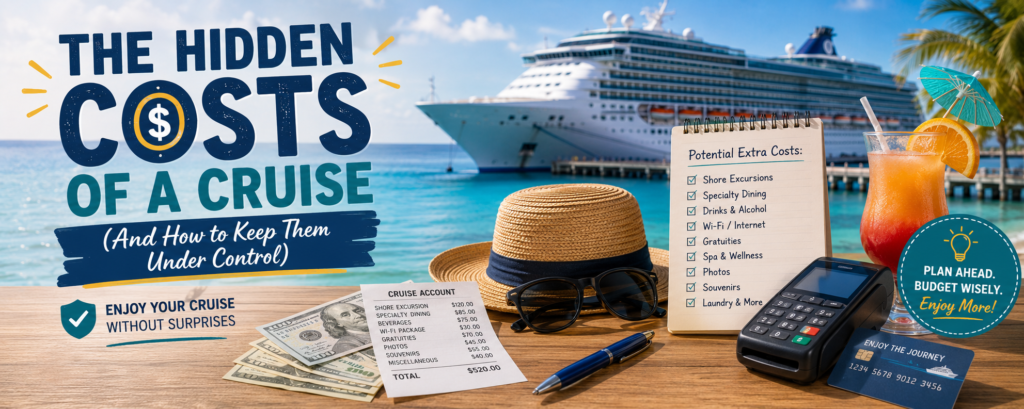
You just booked what seemed like an amazing deal, a 7-night Caribbean cruise for $899 per person. But by the time you add gratuities, parking, drinks, Wi-Fi, excursions, and transportation, that bargain vacation could easily cost twice as much. Welcome to the world of travel marketing. Like many vacations, the advertised cruise fare is only part of the total cost, and there are several additional expenses that can catch first-time cruisers by surprise.
The good news? Most of these costs are not really “hidden” if you know what to look for. With a little research and planning ahead, you can budget for the expenses that matter to you while finding ways to reduce, or even eliminate, many of the others.
In this guide, we’ll break down the most common costs beyond your cruise fare, explain which ones are worth paying for, and share practical tips to help you save money without sacrificing your vacation. The goal is not simply to spend less. It is to avoid surprises so you can relax, enjoy your cruise, and start thinking about planning your next cruise before you even step off the ship.
1. Gratuities
Typical Cost: Approximately $17 to $25 per person, per day, depending on the cruise line and cabin category.
For many first-time cruisers, gratuities are one of the biggest surprises. They are usually charged automatically to your onboard account each day unless you have prepaid them or they are included as part of a cruise package.
Gratuities are also one of the hottest topics in the cruising community. If you’ve spent any time in cruise Facebook groups or online forums, you’ve probably seen passionate debates about whether they should be paid, prepaid, adjusted, or removed altogether. As different parts of the world have different tipping customs, this isn’t surprising.
Here’s my personal take: Pay the gratuities, and do it knowing you’re helping reward the hardworking crew members who make your vacation special. The crew work 7 days a week, up to 11 months at a time. Gratuities are a key part of their income.
The crew members who take care of your cabin, serve your meals, prepare your food, and keep the ship running put in incredibly long hours, often spending months away from their families. While you’ll likely get to know your room steward and dining staff, it’s easy to forget about the many crew members working behind the scenes. Housekeeping teams, galley staff, cleaners, dishwashers, laundry workers, and countless others all play a role in making your vacation enjoyable. A portion of the automatic gratuities helps compensate many of these hardworking crew members as well.
I don’t look at gratuities as an optional expense. I consider them part of the true cost of taking a cruise, just like taxes, port fees, or transportation to the port. If you budget for them from the beginning, they stop feeling like a surprise and simply become part of the vacation cost.
2. Drinks
Typical Cost: Anywhere from $0 to several hundred dollars per person, depending on your drinking habits.
One of the quickest ways to increase the cost of your cruise is through beverages. While water, coffee, tea, and a few other drinks are typically included, alcoholic beverages, specialty coffees, bottled water, soda, energy drinks, and fresh juices usually cost extra.
Drink packages are another hot topic among cruisers. Some people swear they’re the best value on the ship, while others think they’re a waste of money. The truth is, it depends entirely on how you vacation.
If you enjoy a few cocktails by the pool, a glass of wine with dinner, specialty coffees in the morning, bottled water throughout the day, and maybe a drink during the evening show, a beverage package may save you money. On some cruise lines, those packages also include other perks that can make them an even better value.
On the other hand, if you’re someone who only has an occasional soda or one alcoholic drink each day, paying as you go is often the less expensive option. The key is to be honest about your habits. Don’t buy a drink package because you feel like you have to. Buy it because the math works for your vacation.
Ways to Reduce the Cost
- Estimate what you’ll realistically drink each day before deciding on a package.
- Remember to include specialty coffees, bottled water, premium teas, smoothies, soda, and other beverages when comparing package prices.
- Check whether your cruise fare or promotional package already includes drinks.
- Use onboard credit toward beverages if you receive it as part of your booking.
- Take advantage of complimentary drinks offered at loyalty events if you’re eligible.
- If you don’t purchase a package, stick primarily to the complimentary beverages available around the ship and pay individually for the drinks you really want.
3. Specialty Dining
Typical Cost: Approximately $35 to $75+ per person, depending on the restaurant and cruise line.
One of the biggest optional expenses you’ll encounter onboard is specialty dining. These restaurants typically offer a more intimate atmosphere, elevated service, premium ingredients, and unique menus that go beyond what’s offered in the Main Dining Room (MDR). For many cruisers, a specialty dinner is a fun way to celebrate a birthday, anniversary, or simply enjoy a different dining experience.
That said, don’t feel like you’re missing out if specialty dining isn’t in your budget. One of the great things about cruising is that your fare already includes a variety of dining options. The Main Dining Room serves multi-course meals each evening, and many cruise lines also include buffets, pizza, burgers, cafés, and other casual dining venues. It’s entirely possible to enjoy a fantastic cruise without spending a single extra dollar on food.
Specialty restaurants are exactly what the name implies: special. They’re designed to offer something different, not something you have to do.
Some cruise packages include one or more specialty dining meals. If you’ve booked one of these packages, be sure to take advantage of those included meals since you’ve already paid for them.
Ways to Reduce the Cost
- If you’re curious about specialty dining, consider booking just one meal during your cruise instead of dining there multiple nights.
- Watch for embarkation day or port day promotions, as some cruise lines offer discounted pricing.
- If your cruise package includes specialty dining, make reservations early to get your preferred restaurant and time.
- Remember that the Main Dining Room is included in your cruise fare and often serves excellent meals with attentive service.
4. Shore Excursions
Typical Cost: Anywhere from $20 to several hundred dollars per person, depending on the activity.
For many cruisers, shore excursions are the highlight of the trip. Whether it’s snorkeling in crystal-clear water, exploring ancient ruins, zip lining through the rainforest, or swimming with dolphins, excursions create some of the most memorable moments of a cruise.
They can also become one of the biggest expenses. The good news is that booking an excursion is completely optional. Many first-time cruisers assume they need to have something planned in every port, but that’s simply not the case.
Some ports are filled with shops, restaurants, beaches, museums, and attractions that are all within walking distance of the cruise terminal. Spending the day exploring on your own can be just as enjoyable as a guided tour, and often costs little or nothing.
Some cruisers even choose to stay onboard while everyone else heads ashore. If you’ve ever wanted to enjoy a quieter pool deck, shorter lines at the buffet, or relax in the hot tub without the crowds, a port day can be the perfect opportunity. After all, you’ve already paid for the ship and all of its amenities.
If you do decide to book an excursion, you’ll generally have two choices: one offered by the cruise line or one booked independently.
Cruise Line Excursions
Cruise line excursions are typically more expensive, but they offer convenience and peace of mind. Transportation is arranged for you, and if the excursion is delayed returning to the ship, the cruise line is generally responsible for getting you back or making arrangements if something unexpected happens.
For first-time cruisers or ports where you’re traveling a significant distance from the ship, that added security may be well worth the extra cost.
Independent Excursions
Independent tour operators can often provide very similar experiences at a lower price. Many are locally owned businesses with excellent reputations and smaller group sizes.
Before booking independently, do your homework. Read recent reviews, understand the cancellation policy, and make sure the operator has a solid track record of returning guests to the ship well before the all-aboard time. Saving money isn’t worth the stress of wondering whether you’ll make it back in time.
Ways to Reduce the Cost
- Research each port before your cruise. You may discover there’s plenty to see and do within walking distance.
- Mix and match your excursions. Book a tour in ports where there’s something you really want to experience, and explore on your own in others.
- Compare cruise line prices with reputable independent operators.
- Consider sharing transportation costs with other passengers if you’re heading to a nearby beach or attraction.
- Don’t feel pressured to book something in every port. Sometimes the best day is a relaxing one onboard.
5. Wi-Fi
Typical Cost: Depending on the cruise line, internet packages can range from around $15 to more than $30 per day, per device.
For many travelers, staying connected is simply part of everyday life. Whether you’re checking email, posting vacation photos, keeping in touch with family, or scrolling social media while relaxing by the pool, Wi-Fi has become something many of us take for granted.
On a cruise, however, internet access is often one of the biggest optional expenses.
Unlike hotels that rely on land-based internet connections, cruise ships use satellite technology to provide internet service while at sea. While cruise ship Wi-Fi has improved dramatically in recent years, it still comes at a cost, and the pricing can be confusing for first-time cruisers.
Most cruise lines offer several internet options. Some have a basic package intended for web browsing and email, while others offer premium packages with faster speeds that are better suited for video calls, streaming, or uploading photos. Some packages are priced per device, while others allow multiple devices to share a single plan, although only one device can be connected at a time. Before purchasing, make sure you understand exactly what you’re getting.
The good news is that not everyone needs Wi-Fi for their entire cruise.
If your itinerary includes several ports, you may be able to connect to free Wi-Fi at a local café, restaurant, or cruise terminal. Some travelers use this opportunity to check email, upload photos, or video chat with family before heading back to the ship. Just be sure to use public Wi-Fi responsibly and avoid accessing sensitive accounts unless you’re using a secure connection.
Ways to Reduce the Cost
- Decide before your cruise how much internet access you’ll actually need.
- Compare the available internet packages to find one that matches your needs rather than automatically buying the most expensive option.
- Use free Wi-Fi in ports when it’s convenient and safe to do so.
- If your cruise package includes Wi-Fi, be sure to activate and use it so you’re getting the value you’ve already paid for.
- Consider whether you need internet every day or if checking in while in port is enough.
6. Transportation and Parking
Typical Cost: Depends on how you travel to the cruise port.
Getting to the cruise ship is an expense that’s easy to overlook when you’re focused on the cruise fare itself. Whether you’re driving to the port, flying across the country, or taking a ride share, transportation costs can add up quickly.
If you’re driving, don’t forget to budget for parking. Cruise terminal parking is incredibly convenient since your car is only a short walk from the ship, but that convenience comes at a price. Parking fees are typically charged by the day, and on a week-long cruise, the total can easily exceed $150 depending on the port.
If you’re flying to your cruise, you’ll also need to consider airfare, airport transfers, baggage fees, and possibly a hotel stay the night before. While these aren’t technically cruise expenses, they’re very much part of the overall vacation budget.
The good news is that there are several ways to reduce transportation costs without adding unnecessary stress to your trip.
Ways to Reduce the Cost
- Compare the cost of parking at the cruise terminal with nearby private parking lots. Many off-site lots offer lower daily rates and complimentary shuttle service to the port.
- Reserve parking in advance whenever possible. Some parking providers offer discounts for booking early.
- If you’re flying, compare nearby airports in addition to the closest one. A slightly longer drive to the port could save hundreds on airfare.
- If you’re traveling with family or friends, consider sharing transportation costs by driving together.
- Look for hotels that offer “Park and Cruise” packages if you’re arriving the day before your sailing. These packages often include one night’s stay, parking during your cruise, and transportation to the cruise terminal.
- Budget for tolls, fuel, and baggage fees so they don’t become unexpected expenses.
7. Pre-Cruise Hotel
Typical Cost: Approximately $100 to $300+ per night, depending on the location and hotel.
If your cruise requires flying to the departure port, a pre-cruise hotel stay is an expense you should seriously consider adding to your budget. While it may seem like an unnecessary extra night, it’s one of the smartest investments you can make.
Flight delays, cancellations, weather, and mechanical issues can happen without warning. If your flight is delayed on embarkation day, the cruise ship won’t wait for you. Missing your cruise could end up costing thousands of dollars, making the price of one hotel night seem like a bargain by comparison.
For that reason, it is highly recommended to fly in at least one day before your cruise. Arriving early gives you a buffer if travel plans don’t go as expected, and it also allows you to start your vacation feeling relaxed instead of worrying whether you’ll make it to the ship on time.
A pre-cruise hotel stay also gives you time to explore the embarkation city, enjoy a nice dinner, pick up any last-minute essentials, and get a good night’s sleep before boarding.
Ways to Reduce the Cost
- Use hotel rewards points if you have them.
- Compare hotels a few miles away from the cruise port, as they are often less expensive.
- Look for hotels that offer complimentary breakfast or shuttle service.
- Consider hotels with “Park and Cruise” packages if you’re driving to the port.
- Book a refundable rate and check prices periodically to see if the cost drops before your trip.
8. Cruise Photos
Typical Cost: Individual photos typically range from around $20 to $50 each, while photo packages can cost several hundred dollars depending on what’s included.
One of the first things you’ll notice after boarding is the ship’s photographers. You’ll find them throughout your cruise taking photos during embarkation, formal nights, at dinner, and at popular spots around the ship and in some ports.
There’s absolutely no obligation to stop for a photo, and you’re never required to purchase any pictures that are taken. Think of it as an opportunity rather than an expectation. Professional cruise photos can make wonderful keepsakes, especially for anniversaries, birthdays, family vacations, or once-in-a-lifetime trips. The quality is often much better than a quick selfie, and everyone gets to be in the picture instead of someone always being behind the camera.
However, the costs can add up quickly if you purchase several individual photos or a large photo package. Some cruise packages include photo benefits or discounts, so it’s worth checking what’s included with your fare before purchasing anything separately. If photos are already part of your package, be sure to take advantage of them during your cruise.
Ways to Reduce the Cost
- Don’t feel obligated to stop for every photographer you see.
- Wait until later in the cruise before deciding whether to purchase a package. You may find that you have fewer photos than expected and only want to buy a couple of favorites.
- Check whether your cruise package includes photo benefits or discounts.
- Purchase individual photos if you only have a few favorites instead of buying a package you’ll never fully use.
- Take advantage of the many beautiful locations around the ship and in port to capture your own memories with your phone or camera.
9. Spa Treatments
Typical Cost: Massages, facials, and other treatments generally range from $100 to several hundred dollars, not including gratuities or any products you may purchase.
A day at the spa can be one of the most relaxing parts of your cruise. Whether it’s a massage after a long day exploring a port or a facial before formal night, treating yourself can be a wonderful way to unwind and make your vacation feel even more special.
Like specialty dining, however, the spa is a luxury, not a necessity.
Cruise ship spas are often more expensive than similar treatments on land, and it’s easy for the final bill to grow beyond the advertised price. After your treatment, your therapist may recommend skincare products or wellness items that can significantly increase what you spend. While these recommendations are usually well-intentioned, don’t feel pressured to make an additional purchase.
If visiting the spa is something you’ve been looking forward to, budget for it ahead of time and enjoy the experience. If it’s not in your budget, don’t worry. You’re already on a cruise, which is relaxing enough for many people.
Ways to Reduce the Cost
- Look for embarkation day or port day specials, which are often discounted.
- Check your cruise planner before sailing for pre-cruise discounts.
- Decide on your spa budget before boarding and stick to it.
- Politely decline product recommendations if you aren’t interested.
- If your cruise package includes spa credits or discounts, be sure to use them.
10. Shopping and Souvenirs
Typical Cost: Completely up to you. Some cruisers spend nothing, while others spend hundreds or even thousands of dollars.
Whether you’re browsing the onboard shops or exploring local stores in port, shopping can quickly become one of the largest discretionary expenses of your cruise.
Cruise ships offer everything from clothing and jewelry to watches, artwork, liquor, and exclusive cruise merchandise. Likewise, every port you’ll visit will have its own selection of souvenirs, local crafts, and specialty items. It’s easy to get caught up in the excitement and make impulse purchases, especially when you’re in vacation mode.
There’s nothing wrong with bringing home a reminder of your trip, most of us do. But before you sail, decide how much you want to spend on shopping and whether you plan to bring home gifts for family and friends. Having a plan before you ever step onboard makes it much easier to avoid impulse purchases. Know your limits, stick to your budget, and focus on buying items that will truly remind you of your vacation for years to come.
Ways to Reduce the Cost
- Set a shopping budget before your cruise and stick to it.
- Wait before making expensive purchases. If you still want the item after you’ve walked around or slept on it, you’ll feel much more confident in your decision.
- Compare prices if you’re shopping for jewelry, watches, or other high-value items. A “duty-free” label doesn’t always mean you’re getting the best deal.
- Consider buying one meaningful souvenir instead of several inexpensive items that may end up in a drawer when you get home.
- If you’re interested in local souvenirs, shop in port rather than automatically assuming the ship has the best selection.
11. The Casino
Typical Cost: Whatever you’re comfortable spending. It can be as little as a few dollars or much, much more.
Like specialty dining or spa treatments, gambling is a completely personal choice. I’m not here to tell you whether you should or shouldn’t visit the casino. If it’s something you enjoy, have fun. My only advice is to set a budget and stick to it. A cruise should create great memories, not unexpected debt.
The important thing to remember is that gambling should be viewed as entertainment, not as a way to make money or pay for other parts of your vacation. While some guests walk away with a nice win, the odds always favor the casino over the long run. It’s easy to lose track of both time and money in a casino. The excitement of a winning streak, or the desire to win back money after a few losses, can quickly turn a fun evening into one of the most expensive parts of your cruise. That doesn’t mean you should avoid the casino altogether. If you enjoy gambling and it’s part of your vacation, have fun with it. Just make sure you’re playing within your comfort zone.
Ways to Reduce the Cost
- Decide on a gambling budget before your cruise and only bring that amount into the casino.
- Once your budget is gone, consider your entertainment for the evening complete and walk away.
- Don’t chase losses by trying to win your money back. That’s when small losses often become much larger ones.
- If you hit a nice win, consider cashing out and enjoying the rest of your evening instead of putting all of your winnings back into the machines or on the tables.
- Remember there are plenty of free entertainment options onboard if you’re looking for something to do after dinner.
12. Medical Expenses and Travel Insurance
Typical Cost: Medical treatment onboard can range from a simple office visit to thousands of dollars for more serious care. Travel insurance varies widely depending on your age, trip cost, and coverage options.
No one books a cruise expecting to get sick or injured, but it does happen. Whether it’s seasickness, a stomach bug, a slip by the pool, or something more serious, the ship’s medical center is there to help. The convenience is invaluable, but so is the bill. Medical care onboard can be expensive, and if you need additional treatment once you’re in a foreign port, the costs can increase quickly.
[Love of Cruising Note: In 2025, my wife slipped at the sail-away party, broke her foot, and was placed in a cast on the ship. It never happens to you, until it happens to you.]
This is where travel insurance deserves serious consideration. Travel insurance isn’t just about canceling your cruise. Depending on the policy, it may also provide coverage for emergency medical treatment, medical evacuation, trip interruption, delayed baggage, missed connections, and other unexpected events. Every policy is different, so it’s important to understand exactly what is and isn’t covered before you purchase one.
My recommendation is simple: always purchase travel insurance that includes emergency medical coverage. It typically costs far less than most people expect, especially when compared to the overall cost of your cruise, and it can provide invaluable protection if something unexpected happens. While none of us plans to get sick or injured on vacation, medical treatment onboard a cruise ship or in a foreign country can be expensive. Having the right travel insurance means you can focus on getting the care you need instead of worrying about how much it’s going to cost. Hopefully you’ll never need to use it, but if you do, you’ll likely consider it one of the best investments you made for your trip.
Ways to Reduce the Cost
- Pack a small travel medical kit with common over-the-counter medications such as pain relievers, seasickness medicine, antacids, and bandages.
- Bring enough prescription medication for your entire trip, plus a few extra days in case your return home is delayed.
- Compare travel insurance policies rather than purchasing the first one you find. Coverage and pricing can vary significantly.
- Check whether any travel protections are included with the credit card you used to book your cruise, but understand their limitations before relying on them.
- Purchase travel insurance soon after booking your cruise if you decide it’s right for you, as some benefits may only be available when purchased early.
13. Laundry
Typical Cost: Laundry prices vary by cruise line, but having individual items washed or pressed can add up quickly over the course of your vacation.
For most week-long cruises, laundry probably won’t be something you need to think about. However, for longer cruises, it can become an unexpected expense. Whether you run out of clean clothes, need something pressed for formal night, or simply want to pack lighter, laundry services are available on most ships for an additional fee.
Fortunately, this is one hidden cost that’s fairly easy to manage with a little planning.
Ways to Reduce the Cost
- Pack enough clothing to last your cruise whenever possible.
- Choose clothing that can be mixed and matched to create multiple outfits.
- Check whether your ship offers self-service laundry facilities, as they’re often much less expensive than full-service laundry.
- Watch for laundry specials that some cruise lines offer during longer sailings.
- If your loyalty status includes complimentary laundry, be sure to take advantage of the benefit.
14. Cell Phone Charges
Typical Cost: Potentially hundreds of dollars if you’re not careful.
Unlike many of the other costs in this guide, unexpected cell phone charges aren’t something most people plan for. Instead, they’re usually the result of a simple mistake. When your cruise ship is at sea, your phone may connect to the ship’s cellular network, which is different from your normal carrier. Depending on your wireless plan, using cellular data, making calls, or sending text messages through the ship’s network can result in surprisingly high charges.
The same can be true when visiting international ports. While many cell phone plans include coverage in certain countries, others charge expensive international roaming fees. Before your cruise, take a few minutes to find out whether your plan works in each of your ports of call and what, if anything, it will cost.
Ways to Reduce the Cost
- Turn on Airplane Mode before your ship departs and leave it on while you’re at sea.
- Use the ship’s Wi-Fi, if you’ve purchased an internet package, for messaging or Wi-Fi calling.
- Check with your cell phone provider before your cruise to understand your international coverage and roaming charges.
- Verify that your plan works in each of your ports of call. If it doesn’t, consider purchasing an international plan or using Wi-Fi while ashore.
- Disable cellular data if you only plan to use Wi-Fi during your cruise.
15. Last-Minute Purchases
Typical Cost: Anywhere from a few dollars to well over $100, depending on what you forget.
Few things are more frustrating than realizing you forgot an essential item after you’ve already left home. Whether it’s sunscreen, a phone charger, over-the-counter medication, toiletries, or even a swimsuit, replacing those items at the cruise terminal, onboard the ship, or in a tourist area is almost always more expensive than buying them before your trip. The good news is that this is one of the easiest hidden cruise costs to avoid. A little planning before you pack can save you both money and stress once your vacation begins.
That’s exactly why I created the Cruise Packing List. It covers the essentials, along with many of the small items that first-time cruisers often forget until it’s too late.
Ways to Reduce the Cost
- Start packing several days before your cruise instead of waiting until the last minute.
- Use a packing checklist to make sure you don’t overlook important items.
- Purchase toiletries, medications, sunscreen, and other essentials before leaving home, where prices are usually much lower.
- Keep a small travel bag with commonly used cruise items so they’re always ready for your next vacation.
- Double-check chargers, power banks, medications, passports, and travel documents before heading to the port.
Final Thoughts
The advertised cruise fare is only the beginning of your vacation budget. By the time you factor in gratuities, transportation, Wi-Fi, excursions, drinks, specialty dining, and a few other extras, the total cost of your cruise may look very different than the price that first caught your attention.
The important thing to remember is that many of these expenses are completely optional. You don’t have to buy a drink package, eat in specialty restaurants every night, book an excursion in every port, or come home with a suitcase full of souvenirs to have an incredible cruise. Some of the best memories you’ll make won’t cost an extra dime.
The goal of this guide isn’t to convince you to spend less. It’s to help you spend smarter. Budget for the things that are important to you, understand which expenses are truly worth it for your vacation style, and don’t feel pressured to purchase something simply because it’s offered.
A little planning before you leave home can save hundreds of dollars, eliminate unnecessary stress, and help you avoid unpleasant surprises once you’re onboard. Instead of worrying about your final bill, you’ll be free to focus on what really matters: exploring new destinations, making memories with family and friends, and enjoying everything that makes cruising such a unique vacation.
At Love of Cruising, we believe that an informed cruiser is a happier cruiser. The more you know before you sail, the more confident you’ll feel once you’re onboard. Hopefully this guide has helped you understand where those extra costs come from, how to budget for them, and where you can save money without sacrificing the experience.
Now that you know what to expect, all that’s left to do is pack your bags, step onboard, and start making memories. There’s a good chance that before your cruise is over, you’ll already be thinking about planning the next one.
Pingback: Cruise Excursions: Why You Don't Need One in Every Port